
Friday, July 3, 2026
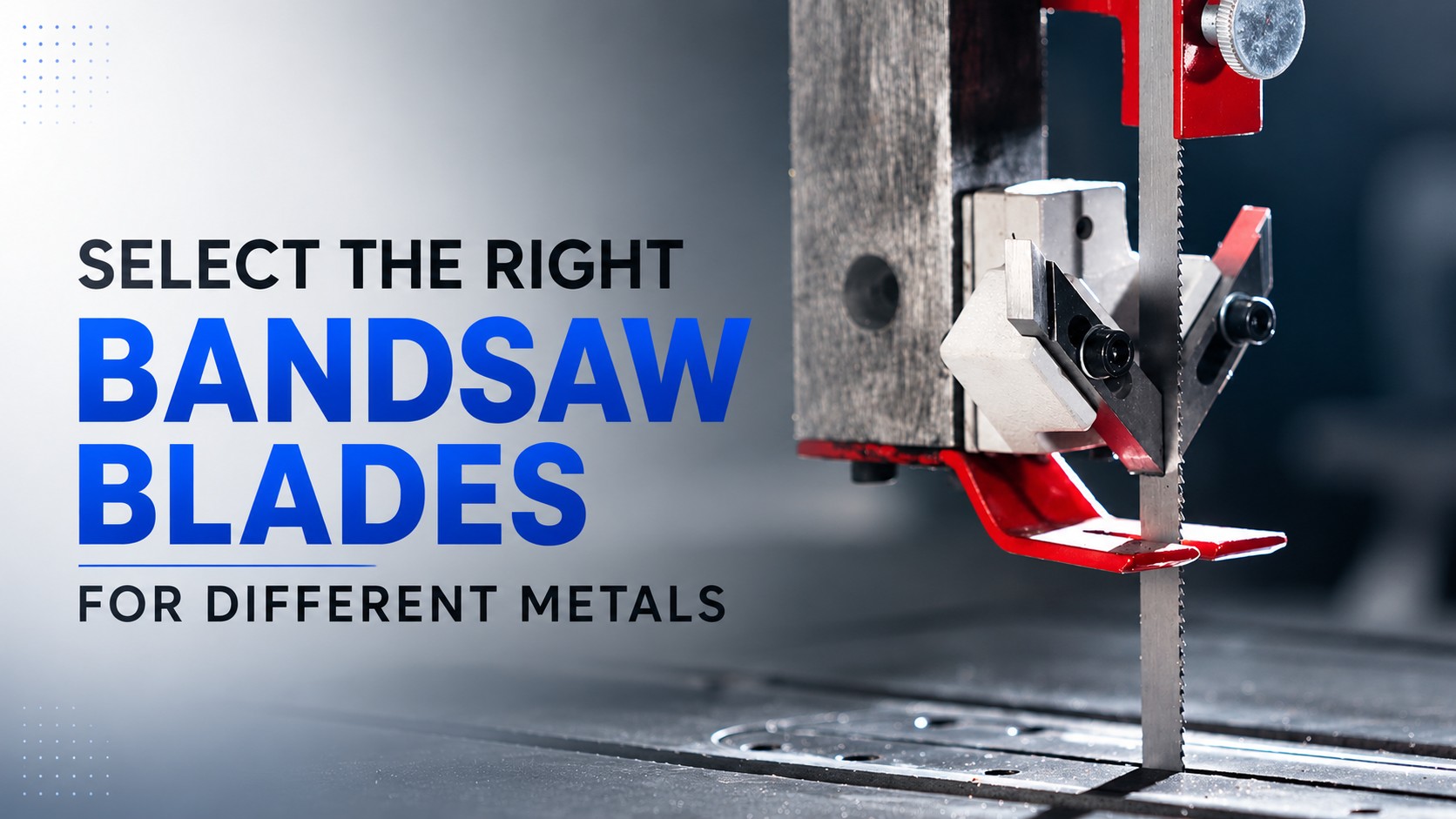
When cutting metals without using the correct blades, one is doomed to waste time and resources. Here is the simple rule on how to select your bandsaw blades: choose a blade depending on its teeth pitch, material, and tooth form in relation to the hardness, thickness, and form of the metal you work with. This is the combination that will allow you to cut faster, better, and with less effort.
Maxwell Products Corp. is a company with years of experience in providing Southeastern Pennsylvania fabricators with the required metalworking and finishing products.
First of all, there is no universal blade for everything. Each blade works better with one material but poorly with another. For example, a blade used on soft aluminium and brass will have quite a different effect compared to hardened steel or stainless steel, and the wrong choice will result in chipped teeth, rapid wear, and poor-quality cuts requiring additional processing.
However, there are some general guidelines for the vast majority of cases:
Besides material types, it is necessary to consider their thickness, as thin-walled tubing and structural sections require another tooth pattern compared to solid bars.
Blade speed (Feet Per Minute - FPM) and teeth per inch (TPI) are both important variables which, used incorrectly, can defeat each other. Softer materials such as aluminum allow greater blade speed and larger teeth, whereas harder materials such as stainless or alloy steels require reduced speeds and finer teeth in order to keep the tool cool and avoid stripping of the teeth.
A basic guideline used by most machinists:
The general principle is that thin materials should have smaller teeth in order to keep a minimum of three teeth in contact with the material. Fewer teeth in contact cause snagging and teeth damage, whereas too many teeth on thick material slow down the cutting process and generate heat.
The blade itself accounts for the vast majority of variables in any bandsaw process. The improper selection of the blade not only makes the process slower but also harms the material being processed, increases the amount of scrap, and causes wear on the equipment due to increased vibration.
Matching blade geometry, tooth pitch, and material makes the cut straighter, improves edge quality, reduces the formation of burrs, and lowers the costs of blade replacements. On the contrary, a blade that is too aggressive for the material destroys its teeth, while a blade that is not aggressive enough tends to clog with chips. That's why bandsaw blade selection cannot be done once; it has to be done each time the specifications change.
For those workshops that want to diversify their processing equipment, using blades from trusted manufacturers, such as Walter cutting tools, along with cutting blades, may give an edge in terms of the versatility of metal cutting operations, from deburring to surface finishing.
It is common to see Lenox blades in workshops, thanks to their longevity. However, there are several things that will help you get the maximum life from them:
The above guidelines will help you extend the service life of your blades.
The nature of the metal from which the blades are manufactured determines the effectiveness of the blades on various surfaces. Blades that use high-speed steel have teeth that possess optimum hardness and flexibility for regular operations, while blades using cobalt have teeth that are able to handle higher temperatures and are perfect for hard metals.
Apart from the nature of the teeth, the back of the blades is equally significant in assessing the efficiency of the blades on contour cuts. Spring-steel back assists in carrying out contour cuts on contour bandsaws, while stiffer backs make the blades suitable for straight cutting and high-volume cutting.
Bar stock and structural materials such as angle iron and I-beam stock are not always as straightforward as round tubing and sheet stock. In solid material, larger teeth may be used because there will be no inconsistency in the cut. However, with an irregularly shaped piece, fine teeth would be better to keep consistent contact with the workpiece.
Bundled or nested cutting, where several workpieces are cut at once, is yet another variable to consider. In bundled cutting, there will be inconsistencies in material thickness and even empty space, making a fine tooth pitch more effective.
Choosing the right blade for each application is not an exercise in making assumptions; it means selecting the appropriate blade tooth design, speed, and material. Those who choose the right blade find themselves replacing blades less frequently, receiving better cuts, and avoiding downtime.
Maxwell Products Corp. is well-known for outstanding customer service and superior product knowledge of metalworking and finishing products for manufacturers located in Pennsylvania and surrounding areas. Instead of trying to make sense of a product catalog, you will be working with someone who knows exactly how to match your blade, tool, or finishing product to your process.
Contact or visit us online to speak with one of our representatives regarding the best blades for your cutting process.
It's highly advised against. For aluminum, the tooth pitch should be coarser and the cutting speed faster; for stainless steel, on the contrary, the blade must have a finer pitch and a lower cutting speed to minimize tooth wear and overheating. One blade for both materials will result in either poor cut quality of aluminum or stainless steel.
This is due to an overly coarse tooth pitch that results in tooth snatching rather than smooth cutting. The change to a blade with a finer tooth count will ensure that at least three teeth will remain in contact with the tubing wall throughout the cutting process.
The frequency of replacement of cutting blades in a production shop largely depends on the workload and the hardness of the material, but checking the condition of blades weekly allows identifying problems related to dulling and chipping before affecting the cut.
Yes, low blade tension leads to the blade drifting and making curved cuts, whereas high blade tension increases blade body stress and decreases blade life expectancy. Blade tension checking at the beginning of each shift can ensure consistent and straight cutting.
Variable-pitch blades dampen vibrations and harmonics during the cutting process and therefore are more suitable when cutting materials of various thicknesses, whereas constant-pitch blades are preferable when cutting uniform stock sizes. Variable-pitch blades are preferred by shops with different profile cuts.