
Friday, May 8, 2026
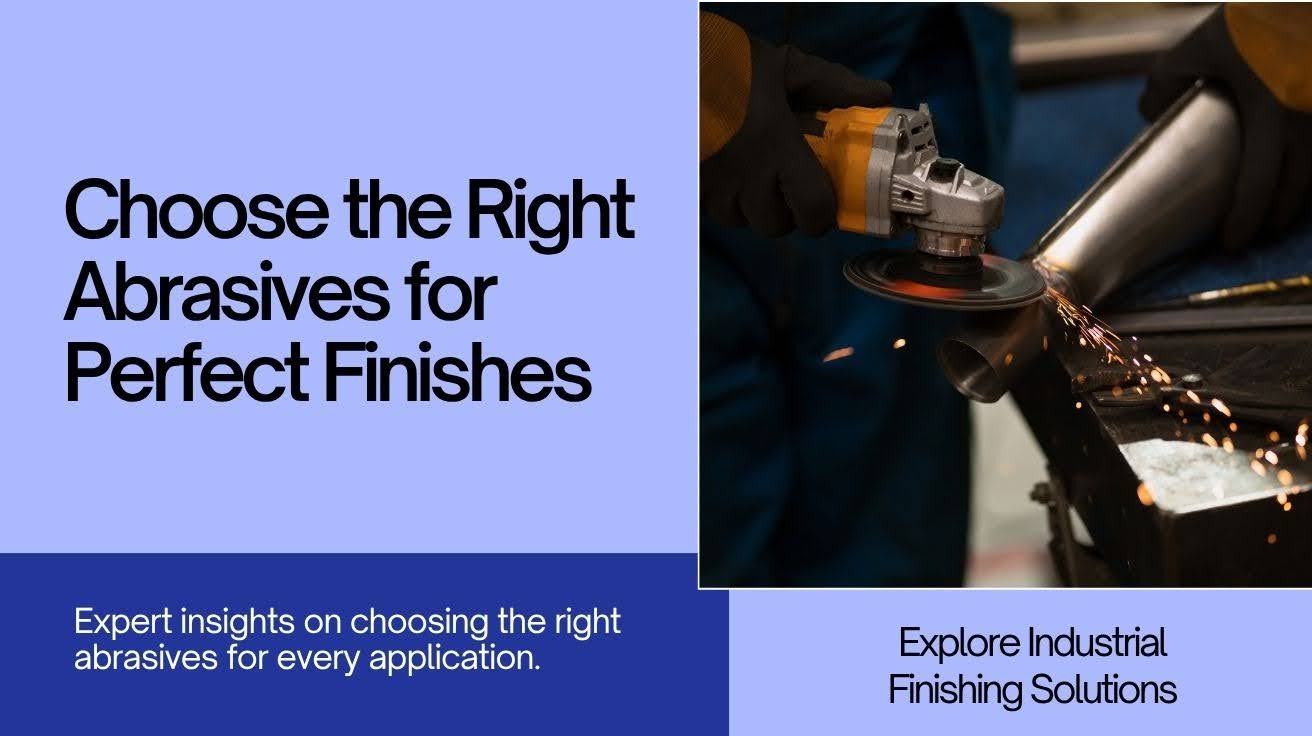
In modern fabrication and manufacturing, achieving a flawless surface finish is not just about aesthetics—it directly impacts durability, corrosion resistance, and performance. That is the reason why metal finishing abrasives play a critical role. Whether you're polishing stainless steel, deburring edges, or preparing surfaces for coating, choosing the right abrasive can make or break your results.
As per the report by Fortune Business Insights, the global abrasives market was valued at $51.50 billion in 2025 and is expected to reach $54.60 billion in 2026, with Asia Pacific holding a dominant 56.80% market share. The consistent demand indicates the necessity for premium abrasives in different industries.
Production firms such as MaxProd understand that purchasing the best abrasive solutions is a strategy to not only achieve a constant output but also a reduced downtime plus a higher quality in finish, especially when the industrial environment is challenging.
First of all, to be able to pick the right one, you have to know how abrasives work. These are the materials that are made for scratching some layers of a surface to make it unfold for you by two mechanics: First, by the friction that removes some particles, second, by contacting the particles, which change the way they are oriented or their shape.
Key functions include:
The most typical types of abrasives in factories are grinding wheels, flap discs, sanding belts, and polishing compounds. Each one is made for a particular purpose and a wrong choice can cause you to lose both time and money or to be left with a product of lower quality.
When evaluating what are the best abrasives for high-quality metal finishing, the solution lies in a trade-off between performance, durability, and the actual application needs.
Key Selection Factors
1. Material Compatibility
Different metals react differently to abrasives. Stainless steel requires abrasives that are free from contamination, while aluminum requires softer abrasives that reduce clogging. Carbon steel applications often benefit from tougher abrasive grains.
2. Grit Size
3. Abrasive Grain Type
4. Backing Material
Soft cloth backings are perfect for shape work, whereas tough fiber discs offer a high level of grinding power.
Correctly picking the combination leads to uniform results and reduced rework in the case of very precise settings.
Picking the best abrasive brand for stainless steel works that result in good finishing and increased work output can be a decisive factor. Understanding how do 3M and Walter abrasives compare for stainless steel work helps professionals make informed decisions.
3M Abrasives
The abrasives of 3M are made up of ceramic grains that are precisely engineered to produce uniformly beautiful finishes. They are very effective in automated processes and applications that require fine surface control.
Walter Abrasives
Walter abrasives are more focused on strong, long-lasting performance and aggressive cutting capabilities. They are widely used in heavy-duty industrial scenarios where the speed of material removal and toughness are major factors.
Key Comparison Insights
At the end of the day, the choice boils down to whether your main concern is precision finishing or deep material removal.
With high-output production, tool life becomes an essential factor. Businesses that are deciding which grinding wheels deliver the longest life in busy shops often focus on advanced abrasive technologies.
Features of Long-Lasting Grinding Wheels
Recommended Options
Premium grinding wheels may have a higher upfront cost, but they drastically lower downtime and the frequency of replacements. MaxProd offers systems that meet the needs of such demanding operations, guaranteeing both durability and high performance.
Many companies held back from buying the most costly abrasives just because they have a higher upfront price. However, understanding why you should upgrade from cheap abrasives to premium ones reveals the long-term benefits.
Disadvantages of Cheap Abrasives
Advantages of Premium Abrasives
This change often results in higher efficiency, better output quality, and reduced operational costs, which makes it a smart investment for any workshop.
Choosing the right abrasive depends on the stage of the finishing process.
1. Heavy Grinding
Use ceramic or zirconia grinding wheels for aggressive material removal and weld seam elimination.
2. Surface Blending
Flap discs or medium-grit abrasives are ideal for smoothing transitions and preparing surfaces.
3. Polishing
Polishing compounds or fine-grit abrasives are used to achieve a high gloss finish, such as on stainless steel.
4. Deburring
Non-woven abrasives can be used tactfully to take off the sharp edges without doing any harm to the workpiece.
The selection of the appropriate abrasive for the nature of work, not only helps to deliver the best results but also to avoid unnecessary wear.
Beyond selecting the right abrasive type, working with a reliable supplier plays a crucial role in achieving consistent results.
MaxProd offers:
Companies that want reliable Industrial finishing solutions should look for well-established suppliers who comprehend the production problems of the factory that really matter and have proven their capabilities in delivering solutions time and again.
Even experienced professionals can encounter issues when selecting abrasives.
Frequent Errors
Ditching these blunders can greatly increase work output, minimize waste and improve the quality of the end product.
Properly maintaining your abrasives can definitely help in making them last longer as well as increase their effectiveness.
Such easy measures will not only allow you to get predictable results but also greatly increase your return on investment.
It is a strategic decision to pick up the right metal finishing abrasives because it will very directly affect productivity, quality, and cost efficiency. From selecting the correct grit and material to investing in premium solutions, every choice plays a role in achieving superior finishing results.
Working with trusted providers such as Maxwell Products Corp., businesses can streamline operations, reduce downtime, and consistently deliver high-quality finished products that meet industry standards.
Ques1. How do I determine the best abrasive for my specific metal application?
Ans: There are instances when the finest abrasive for a metal is dictated by its composition, the type of finish, and the depth of processing. For instance, stainless steel is best treated with non-contaminating abrasives such as ceramic or zirconia, while metals on the softer side, like aluminum, can be done with milder materials. Assessing all these factors helps you to get the most out of the abrasive in terms of performance and finish quality.
Ques2. How do 3M and Walter abrasives compare for stainless steel work in long-term use?
Ans: Both vendors are good, but they are strong at different things. 3M abrasives work best if you want very precise and the same results all the time, especially if you do it by robot. Walter abrasives are the ones that can take even very tough treatment without breaking easily and cutting very actively. What will be the result after a long time depends on exactly what you are doing.
Ques3. Which grinding wheels deliver the longest life in busy shops with continuous operations?
Ans: Grinding wheels that have ceramic grains can last the longest, most of the time, since they sharpen themselves and resist heat. Zirconia wheels are also quite tough and can be used for a variety of things. Buying a good wheel that is not only up to the task but is able to run continuously will really help you in saving the cost of downtime and wheel replacement.
Ques4. Why should you upgrade from cheap abrasives to premium ones in industrial settings?
Ans: Top-level abrasives last way longer, allow you to cut in less time, and give a nicer surface after that. Sure, they are more expensive than the ones at the budget level, but what happens is that those will be the ones you get the most replacements of, leading to lower productivity due to downtimes. Then, if you factor in other things like changing, cleaning and so on, you will see how switching from cheap to premium will be a very wise move.
Ques5. What practices help extend the life of metal finishing abrasives?
Ans: Proper storage, correct pressure application, and regular inspection are the main factors, undoubtedly. Besides that, you should not use too much force and be sure that the abrasive you use goes well with the material that you are going to work on, as these will also help make your metal finishing abrasives last longer and perform better.